 By Sanjeev Sinha
 Every time you turn on a tap in Bhopal, there’s a genuine chance the water flowing out started its journey at Kolar Dam. This isn’t an exaggeration — this single reservoir supplies somewhere between 60 to 70 percent of the entire city’s drinking water, making it one of Madhya Pradesh’s most quietly essential pieces of infrastructure. It’s also become a genuinely popular weekend escape for Bhopal residents chasing sunsets, greenery, and a break from city traffic. Here’s everything worth knowing before you plan your visit.
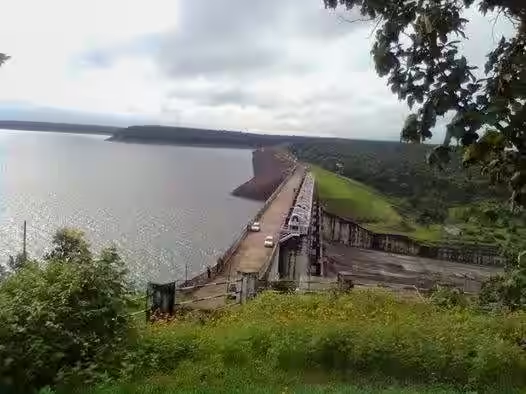
Quick Overview
| Detail | Information |
| River | Kolar River, a right-bank tributary of the Narmada |
| Location | Near Lawakhweri/Lawakhadi village, Sehore district, Madhya Pradesh |
| Distance from Bhopal | Around 35 km southwest |
| Nearest Railway Station | Bhopal Junction, about 15–35 km away |
| Nearest Airport | Raja Bhoj Airport, Bhopal |
| Completed | 1989–1990 |
| Dam Type | Earthen/masonry dam |
| Dam Height | 45 metres |
| Storage Capacity | 265 million cubic metres |
| Drinking Water Supplied to Bhopal | Around 153 MLD, roughly 60–70% of city’s total supply |
| Sluice Gates | Eight |
| Water Treatment Plant | Kolar Water Treatment Plant, largest in Bhopal |
| Visiting Hours | Generally daytime hours; no strict published schedule |
| Entry Fee | Free |
| Best Time to Visit | November to April; mid-to-late monsoon for open gates |
Where Kolar Dam Is Located
Kolar Dam sits roughly 35 kilometres southwest of Bhopal city, near Lawakhweri village in Sehore district. It’s a genuinely manageable drive, taking less than an hour from central Bhopal, which is exactly why it’s become such a popular short getaway for city residents rather than requiring a full day of travel.
Bhopal Junction Railway Station serves as the most practical rail connection, with taxis or local transport covering the final stretch to the dam. Raja Bhoj Airport in Bhopal, well connected to Mumbai, Ahmedabad, Raipur, and Delhi, remains the nearest air link for visitors coming from further afield. The road journey itself is straightforward for most of the year, though a few visitor accounts mention rough patches during monsoon, so a sturdy vehicle helps if you’re travelling during the rainy season.
The River Behind Bhopal’s Water Supply
The dam is built across the Kolar River, a right-bank tributary of the Narmada that originates in the Vindhya mountain ranges of Sehore district. The river flows roughly 101 kilometres in a south-westerly direction before merging with the Narmada near Nasrullahganj, draining a catchment area of 1,347 square kilometres across Sehore and Raisen districts.
What makes this river genuinely valuable as a drinking water source is the absence of significant industrial activity along its route, keeping the water relatively pure compared to many urban water sources elsewhere in India. This purity is exactly why the Kolar Water Treatment Plant, drawing raw water from this dam, has become the largest and most important facility supplying Bhopal’s drinking water.
A History Rooted in Bhopal’s Growing Water Needs
Kolar Dam was completed around 1989 to 1990, built specifically to secure a reliable water source for Bhopal’s expanding population while also supporting irrigation in the surrounding agricultural region. Constructing the dam required navigating genuinely difficult terrain, with hilly, forested catchment areas creating logistical challenges for material transport, alongside efforts to minimise disruption to the surrounding teak-dominated forests.
It’s worth acknowledging honestly that building this dam also required displacing local communities, with rehabilitation handled primarily through land compensation. In hindsight, this approach has been criticised for not adequately addressing long-term livelihood opportunities for the villagers who lost their original land, a pattern that’s unfortunately common across many of India’s large water infrastructure projects.
What Kolar Dam Does for Bhopal Today
The numbers here are genuinely significant. The Kolar Water Treatment Plant processes and delivers approximately 153 million litres of treated water daily, accounting for somewhere between 60 and 70 percent of Bhopal’s total drinking water supply, depending on which source you check. This makes Kolar Dam arguably the single most important piece of water infrastructure for the entire city, working alongside other sources to keep Bhopal’s taps running.
Beyond drinking water, the dam supports irrigation across the surrounding agricultural areas and has developed a genuinely interesting ecosystem within its reservoir, supporting a rich variety of fish species, with maximum diversity typically observed during the post-monsoon months of November and December when plankton abundance peaks. Water quality has faced some pressure from upstream urban expansion around Bhopal over the years, a genuine ongoing concern for the reservoir’s ecological health, though it remains functional for its primary water-supply purpose.
Managing Water Levels: A Delicate Balancing Act
Kolar Dam’s sluice gate operations offer a genuinely interesting window into how carefully Bhopal’s water security is managed. In August 2016, two gates were opened for the first time in three years after the reservoir rose to 462.16 metres above mean sea level, a move specifically designed to prevent overflow during monsoon inflows following a prolonged dry spell. A similar situation played out in September 2019, with gates activated again after another three-year gap. By August 2020, all eight gates were closed to conserve water amid variable rainfall patterns.
This pattern of periodic gate operations reflects the genuine tightrope water managers walk here, balancing enough storage for the city’s drinking needs against the risk of the reservoir overtopping during unusually heavy monsoon inflows.
What There Is to See and Do
The dam’s main draw is simply its setting — a huge embankment holding back a genuinely picturesque lake, surrounded by lush greenery that intensifies dramatically during and after monsoon. Sunset here has developed a strong following among Bhopal’s day-trippers, with the changing light over the water making for a memorable end to a visit.
Boating, birdwatching, and nature photography are all commonly mentioned activities, and the deciduous forest surrounding the reservoir offers genuine trekking potential for visitors wanting to explore beyond the dam itself. That said, several visitor reviews note that unless you have access to the Kolar Guest House, dedicated picnic infrastructure is limited, so it’s worth carrying your own supplies and treating this as a scenic, nature-focused visit rather than expecting extensive tourist facilities.
Practical Realities Worth Knowing
Accommodation options for regular visitors are genuinely sparse near the dam, with government arrangements existing but not widely accessible to the general public. A few resorts have developed in the surrounding area, though it’s worth checking their specific activities, rates, and availability in advance rather than assuming walk-in options will be available.
Carrying bottled water and snacks is a sensible precaution given limited dining options at the site itself, and sunscreen is worth packing given how exposed much of the reservoir area is to direct sunlight.
Timings and Best Time to Visit
Kolar Dam doesn’t operate under a strict, formally published visiting-hours system, with most visitors accessing the site during daytime hours. Entry is free, making this a genuinely budget-friendly outing beyond travel costs.
November through April offers the most comfortable weather for visiting, with the region experiencing distinct seasons — cool mornings around 5°C in winter, rising to considerably warmer daytime temperatures. That said, several regular visitors specifically recommend mid-to-late monsoon, when the dam’s gates open to manage the swollen river, as the most visually rewarding time to see Kolar Dam in full force, even though summer’s peak heat, reaching up to 45°C, is best avoided altogether.
Frequently Asked Questions
Q1. How much of Bhopal’s drinking water actually comes from Kolar Dam?
Estimates range between 60 and 70 percent of the city’s total supply, depending on the source, making it genuinely one of the most critical pieces of water infrastructure for Bhopal’s daily functioning.
Q2. Is Kolar Dam a good spot for a family picnic?
It can be, though facilities are limited unless you have access to the Kolar Guest House. Carrying your own food and water, and checking nearby resort options in advance, will give you a more comfortable picnic experience.
Q3. When is the best time to see Kolar Dam’s gates open?
Mid-to-late monsoon, typically August through October, offers the best chance of seeing the sluice gates opened to manage rising water levels, creating a genuinely dramatic sight compared to the calmer dry-season view.
Q4. Is the road to Kolar Dam accessible year-round?
Mostly yes, though a few visitors have reported rough patches during heavy monsoon rainfall. A sturdy vehicle and some flexibility around timing help if you’re planning a visit during peak rainy season.