 By Sanjeev Sinha
 If you’ve ever wondered how a structure built nearly 900 years ago could still be actively irrigating farmland today, Kodiveri Dam is your answer. This isn’t just a scenic waterfall spot near Gobichettipalayam — it’s a genuine engineering ancestor that recently earned international recognition, while still doing the exact job it was built for back in 1125 AD. Here’s everything worth knowing before you plan your visit.
Quick Overview
| Detail | Information |
| River | Bhavani River |
| Location | Near Gobichettipalayam, Erode district, Tamil Nadu |
| Distance from Gobichettipalayam | Around 10–15 km, towards Sathyamangalam |
| Distance from Coimbatore | Around 70–100 km |
| Original Channel Excavated | 1125 AD, by Kongalvan Vettuva Gounder |
| Current Structure Built | 17th century, under Mysore rulers |
| Dam Type | Masonry check dam, carved from a 20-foot rock wall |
| Irrigation Coverage | Over 25,000 hectares |
| Maintained By | Tamil Nadu Public Works Department / Water Resources Department |
| Recent Recognition | World Heritage Irrigation Structure award, ICID, September 2025 |
| Entry Fee | Around ₹5 |
| Visiting Hours | Generally 8:00 AM to 6:00 PM |
| Best Time to Visit | October to February |
Where Kodiveri Dam Is Located
Kodiveri Dam sits along State Highway 15, roughly 10 to 15 kilometres from Gobichettipalayam towards Sathyamangalam, in Erode district’s western region. It’s positioned within genuinely scenic terrain, close to the forested belt that once housed a significant tiger population, which is actually where the dam gets its name.
The drive here from Coimbatore typically takes around 1.5 hours, covering roughly 70 to 100 kilometres depending on your exact starting point. The Bannari Mariamman Temple, a significant pilgrimage site, sits just about 20 kilometres away, making it easy to combine both a spiritual visit and a scenic dam trip in a single outing.
The River and the Meaning Behind “Kodiveri”
The dam is built across the Bhavani River, one of Tamil Nadu’s significant waterways, at a location historically surrounded by dense forest. The name “Kodiveri” comes from “kodivari,” meaning tiger in Tamil, a genuinely evocative naming choice reflecting the large tiger population that once inhabited this forested region around the dam.
Today, the water reaching Kodiveri is regulated by releases from the upstream Bhavanisagar Reservoir, meaning the dam’s actual water flow and visual spectacle depend heavily on how much water is being released upstream at any given time, something worth checking before you make the trip specifically to see the waterfall in full flow.
A History Spanning Nearly 900 Years
This is genuinely one of the more remarkable historical timelines among Indian water structures. A channel was first excavated at Kodiveri in 1125 AD by Kongalvan Vettuva Gounder, a chieftain serving under Chola King Kulottunga I, specifically to address severe drought conditions affecting the region at the time.
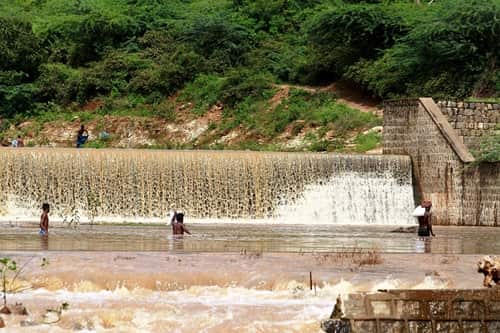
The current dam structure, however, dates to the 17th century, built under the Maharaja of Mysore using elephants and prisoners as labour. Engineers carved the dam from a solid 20-foot-high rock wall, interlocking the stones with iron bars and using lead as mortar, a genuinely sophisticated technique for its era. These original construction features are typically hidden beneath the water and only become visible during the dry season when river levels drop considerably.
In 1950, shortly after India’s independence, the dam’s crest level was raised by 0.75 metres through the addition of a falling shutter mechanism, improving its capacity to regulate irrigation while reducing flood risk. This marked the beginning of systematic government oversight of the structure, which continues today under Tamil Nadu’s Water Resources Department.
A Genuine International Recognition in 2025
This is worth knowing since it’s genuinely recent and significant. In September 2025, the Kodiveri Anicut received the World Heritage Irrigation Structure award from the International Commission on Irrigation and Drainage, formally recognising its enduring significance as a traditional irrigation work that’s remained functional for nearly nine centuries. This is a genuinely rare honour, placing Kodiveri among a select group of historic irrigation structures worldwide recognised for their lasting engineering and agricultural contribution.
Ongoing Challenges Worth Knowing Honestly
It’s important to address this rather than presenting Kodiveri purely as a picture-perfect destination. In August 2022, heavy rainfall washed away a 100-metre concrete floor section at the dam’s deep end, built earlier for scour protection at a cost of ₹2.65 crore, highlighting genuine ongoing vulnerabilities to extreme weather events. More recently, in October 2025, heavy discharges from the upstream Bhavanisagar Dam caused severe flooding, leading to the temporary closure of the site to visitors.
Beyond flooding, the region has faced genuine drought challenges too. The 2002-2004 period marked the first recorded instance in modern history where water diversions into the Kodiveri Canal were halted or severely reduced due to insufficient upstream inflows, forcing local farmers to drill considerably deeper borewells, sometimes 100 to 200 metres, to sustain their crops. Groundwater depletion remains an ongoing concern too, with water levels in the region dropping 6 to 14 metres since 1971 due to overexploitation, a genuine long-term sustainability issue tied to this centuries-old irrigation system.
What Kodiveri Dam Does for the Region Today
Despite these challenges, the dam continues supporting irrigation across over 25,000 hectares, channelling water into the Thadapalli and Arakankottai canals as part of the broader Lower Bhavani irrigation system. This recharge also supports over 35,000 wells in the surrounding area, helping maintain groundwater levels in non-command zones during normal monsoon years.
What There Is to See and Do
The dam’s cascading waterfall remains the primary draw, with gently flowing water creating designated bathing areas where visitors can safely take a dip, particularly when barricades are in place to hold onto during heavier flow periods. A landscaped park at the base of the dam offers rides, games, and general entertainment facilities, alongside well-maintained lawns and fountains that add to the scenic appeal.
Coracle rides, locally called parisal, are a genuine highlight here, often operated by local fishermen who also catch and sell fresh fish directly to visitors, giving you the option to enjoy freshly cooked fish on-site. Photography enthusiasts consistently recommend visiting during golden hour for the best lighting on both the waterfall and the surrounding greenery.
An Honest Note on Recent Cleanliness Concerns
It’s worth being upfront here. While many long-time visitors fondly recall childhood memories of playing in Kodiveri’s waters, some more recent reviews describe disappointing conditions, with certain sections of the site affected by littering and poor maintenance, occasionally making the water unappealing for bathing. This appears to be an inconsistent, location-and-time-dependent issue rather than a universal problem, so it’s worth checking recent visitor feedback before planning a trip specifically centred around swimming.
Timings and Entry Details
Kodiveri Dam is generally open from 8:00 AM to 6:00 PM, with a modest entry fee of around ₹5 per person. Most visitors comfortably spend 2 to 3 hours here, covering the waterfall area, the park, and a coracle ride if that interests you.
Best Time to Plan Your Visit
October through February offers the most comfortable weather and generally favourable water flow following the monsoon season, making it the widely recommended window for visiting. It’s worth noting that water availability depends heavily on releases from the upstream Bhavanisagar Dam, so visiting during periods of low upstream water can mean encountering a considerably drier site than expected, as several visitor reviews specifically caution during pre-monsoon months like April and May.
Frequently Asked Questions
Q1. Why does Kodiveri Dam sometimes have very little or no water?
The dam’s water flow depends entirely on releases from the upstream Bhavanisagar Reservoir. During periods when this upstream dam hasn’t released water, particularly in the drier months before monsoon, Kodiveri can appear largely dry, so it’s worth checking recent conditions before planning a trip specifically for the waterfall experience.
Q2. Is it safe to swim or bathe at Kodiveri Dam?
Generally yes, in designated areas where the water flows gently and barricades are provided for support. However, during periods of heavy water flow, authorities may restrict bathing entirely for safety reasons, so it’s important to follow on-site guidance rather than assuming access is always available.
Q3. What makes Kodiveri Dam historically significant beyond its age?
In September 2025, it received the World Heritage Irrigation Structure award from the International Commission on Irrigation and Drainage, formally recognising its continuous functionality and engineering significance across nearly 900 years since its original 1125 AD channel excavation.
Q4. Can I combine a Kodiveri Dam visit with other nearby attractions?
Yes, easily. The Bannari Mariamman Temple sits just about 20 kilometres away, making it simple to combine a spiritual visit with your trip to the dam, and Sathyamangalam’s forest areas are also within reasonable driving distance for those wanting a fuller day of sightseeing.