 By Sanjeev Sinha
 Karnataka’s oldest surviving dam wasn’t funded by a government budget or a foreign loan — it was built because the Mysore royal family pledged their own jewellery to pay for it. That’s genuinely the story behind Vani Vilasa Sagara, popularly known as Marikanive Dam, a structure that’s been continuously operating since 1907 and still supplies water to a large stretch of drought-prone Chitradurga district. Here’s everything worth knowing before you plan your visit.
| Detail | Information |
| Also Known As | Vani Vilasa Sagara (VVS), Mari Kanive Dam |
| River | Vedavathi River, a tributary of the Krishna River |
| Location | Hosadurga Taluk, Chitradurga district, Karnataka |
| Distance from Hiriyur | Around 20 km |
| Distance from Hosadurga | Around 24 km |
| Distance from Chitradurga | Around 55–60 km |
| Distance from Bengaluru | Around 180 km |
| Built | 1897 to 1907, completed August 1907 |
| Built Under | Maharaja Krishna Raja Wodeyar Bahadur of Mysore |
| Named After | Kempa Nanjammanni Vani Vilasa, the Maharaja’s mother |
| Status | Oldest continuously operating dam in Karnataka |
| Dam Dimensions | 162 feet by 1,300 feet |
| Storage Capacity | 30 TMC |
| Irrigation Coverage | Over 100 sq. km in Hiriyur taluk |
| Visiting Hours | Generally 8:30 AM to 5:00 PM |
| Best Time to Visit | November, for Kanive Maramma fair |
Where Marikanive Dam Is Located
Marikanive Dam sits in Hosadurga Taluk of Chitradurga district, roughly 20 kilometres from Hiriyur, 24 kilometres from Hosadurga, and 55 to 60 kilometres from Chitradurga town. It’s positioned around 180 kilometres northwest of Bengaluru, making it a genuinely feasible day trip or weekend destination for travellers based in the state capital.
NH 4 passes through Chitradurga, and the district is well connected by buses from across the state, making it straightforward to reach the wider area even if you’re travelling by public transport before continuing on to the dam itself by local transport.
The River Behind Karnataka’s Oldest Dam
The dam is built across the Vedavathi River, a tributary of the Krishna River that flows through this genuinely dry stretch of Central Karnataka’s Deccan region. Before this dam existed, the surrounding area struggled significantly with water scarcity, a challenge that’s shaped much of Chitradurga district’s agricultural history.
What’s genuinely remarkable is that the potential of this exact site was first identified over a century before construction even began. In 1803, Scottish botanist Francis Buchanan observed during his travels through the region that Marikanive showed genuine promise as a reservoir location, a rare case of an early colonial-era scientific observation directly shaping infrastructure built nearly a hundred years later.
A History Built on Royal Sacrifice
Construction on Vani Vilasa Sagara ran from 1897 to 1907, undertaken under the regime of Maharaja Krishna Raja Wodeyar Bahadur of Mysore, and named in honour of his mother, Kempa Nanjammanni Vani Vilasa. This royal connection gives the dam a genuinely different origin story compared to most Indian dams built during the British colonial or post-independence eras.
Here’s the detail that genuinely stands out: due to financial constraints at the time, the Mysore royal family reportedly had to pledge their own royal jewellery to fund the dam’s construction. This wasn’t simply a government infrastructure project funded through routine taxation — it represented a genuine personal investment from the ruling family, reflecting how seriously they took solving this region’s chronic water scarcity.
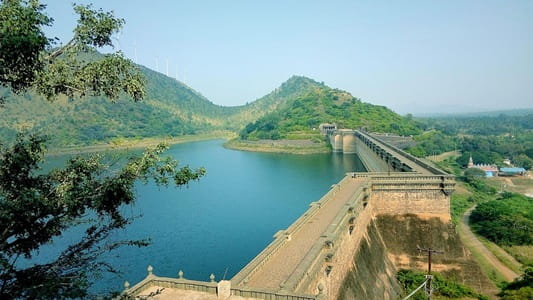
Completed in August 1907, the dam stands today as the oldest continuously operating dam in Karnataka, a title that speaks to both the quality of its original engineering and the sustained maintenance it’s received over more than a century of operation. Architecturally, it’s distinguished by two pavilion halls built in the Saracenic style, giving the structure a genuinely elegant, historically distinctive appearance rather than the purely utilitarian look typical of most irrigation dams.
What Marikanive Dam Does for the Region Today
The dam irrigates more than 100 square kilometres of land across Hiriyur taluk through its right and left bank canal systems, transforming what would otherwise be largely arid Deccan terrain into productive agricultural land. Beyond irrigation, it also serves as the primary source of domestic water for Hiriyur, Hosadurga, Chitradurga, and Challakere taluks, making it a genuinely essential piece of infrastructure well beyond its historical significance.
Given ongoing water quantity challenges in more recent decades, the Karnataka government has integrated Marikanive into the broader Upper Bhadra Project, allocating 2 TMC of water specifically to this dam from the larger volumes lifted from the Tunga Gajanur and Bhadra dams. This modern intervention reflects a genuine, ongoing effort to secure the reservoir’s water supply for the drought-prone districts depending on it.
A Genuinely Exciting Tourism Transformation Underway
This is worth knowing if you’re planning a visit in the near future. In 2022, then Chief Minister Basavaraj Bommai announced funding for modernising the dam’s canals and irrigation infrastructure, alongside developing the site for tourism through new garden landscaping. The General Thimayya National Academy of Adventure has also established an adventure camp near the reservoir specifically for water sports.
More recently, in 2025, Karnataka’s tourism department announced a significant expansion of attractions at Vani Vilasa Sagara. Tourism Minister H.K. Patil confirmed that from November 2025, the reservoir would host a full range of water sports, including boating, kayaking, jet-skiing, banana-boat rides, windsurfing, and sailing. A new Karnataka State Tourism Development Corporation “Mayura” hotel has also been proposed to accommodate visitors, suggesting this quiet, historically significant dam is genuinely on the verge of becoming a considerably more developed tourist destination.
What There Is to See and Do
Beyond the dam’s historical and architectural interest, a shrine dedicated to Kanive Maramma sits at the base of the dam, with a well-maintained park adjacent to the temple. Every November, devotees travel here to participate in the annual Kanive Maramma fair, offering visitors a genuine chance to experience local culture and religious tradition alongside the site’s engineering heritage.
The surrounding forest cover has been deliberately preserved over the decades, making this both a historical landmark and a genuine nature retreat. One particularly memorable detail mentioned by regular visitors is that the dam’s shape, viewed from a certain angle, resembles the map of India, a small but genuinely delightful quirk that adds character to a visit here.
Timings and Practical Details
The dam is generally accessible from 8:30 AM to 5:00 PM throughout the week. It’s advisable to avoid visiting during heavy rainfall, given the terrain and the practical challenges that can come with monsoon travel in this part of Karnataka.
Best Time to Plan Your Visit
November stands out as a particularly rewarding time to visit, coinciding with the Kanive Maramma fair and offering a chance to experience genuine local devotion and festivity alongside the dam’s historical significance. Given the major tourism developments announced for late 2025 and beyond, it’s also worth checking current facilities and water sports availability before planning your trip, since this destination appears to be evolving rapidly from a quiet historical site into a considerably more active tourist destination.
Frequently Asked Questions
Q1. Why is Vani Vilasa Sagara considered such a historically significant dam?
It’s the oldest continuously operating dam in Karnataka, completed in 1907, and its construction was reportedly funded in part by the Mysore royal family pledging their own jewellery due to financial constraints, giving it a genuinely unique origin story compared to most Indian dams.
Q2. Is Marikanive Dam taller than the more famous KRS Dam near Mysuru?
Yes, according to available sources, Vani Vilasa Sagara stands taller than KRS Dam, despite being considerably less well-known to most travellers outside Chitradurga district.
Q3. What water sports and new facilities are being developed at the dam?
Starting November 2025, Karnataka’s tourism department announced plans for boating, kayaking, jet-skiing, banana-boat rides, windsurfing, and sailing at the reservoir, alongside a proposed new KSTDC “Mayura” hotel, signalling a significant tourism upgrade for the site.
Q4. What’s the best time to visit if I want to experience local culture alongside the dam’s history?
November is genuinely ideal, since this is when the annual Kanive Maramma fair takes place at the shrine near the dam’s base, offering a chance to experience local devotional traditions alongside your sightseeing.