 By Sanjeev Sinha
 If you’ve ever driven from Chikmagalur toward Shivamogga chasing coffee plantations and waterfalls, there’s a good chance you’ve crossed paths with Bhadra Dam without fully appreciating what it does. This isn’t just a scenic stop with islands and a wildlife sanctuary next door — it’s one of Karnataka’s most significant rice-irrigation projects, designed by the same engineer whose name shows up on half the state’s major infrastructure. If you’re planning a trip through this stretch of the Western Ghats, here’s everything worth knowing.
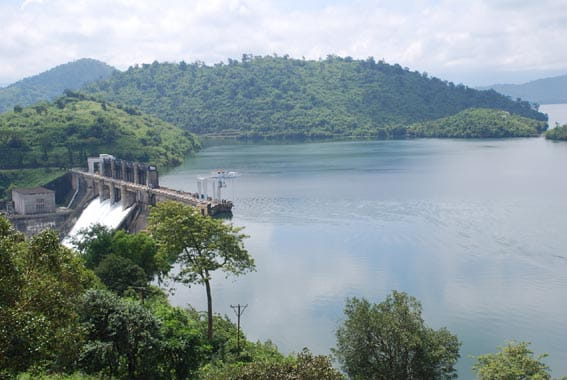
| Detail | Information |
| Also Known As | Lakkavalli Dam |
| River | Bhadra River, a tributary of the Tungabhadra |
| Location | Lakkavalli, on the border of Bhadravathi and Tarikere taluks, Karnataka |
| Distance from Tarikere | Around 20 km |
| Distance from Shivamogga | About 31–70 km (sources vary by route) |
| Distance from Chikmagalur | Roughly 78 km |
| Nearest Railway Stations | Tarikere and Bhadravathi, both within an hour’s drive |
| Designed By | Sir M. Visvesvaraya |
| Construction Started | 1946–47 |
| Commissioned | 1965 |
| Dam Type | Composite earth-cum-masonry structure |
| Dam Height | 59.13 metres |
| Dam Length | 1,708 metres |
| Irrigation Potential | Around 162,818 hectares |
| Power Generation | 39.2 MW across three powerhouses |
| Bordering Wildlife Area | Bhadra Tiger Reserve and Wildlife Sanctuary |
| Visiting Hours | Generally 6:00 AM to 4:00 PM |
| Entry Fee | Free |
| Best Time to Visit | October to March |
Where Bhadra Dam Is Located
Bhadra Dam sits at Lakkavalli, right on the border between Bhadravathi and Tarikere taluks in Karnataka’s western region. It’s roughly 20 kilometres from Tarikere, and depending on your exact route and starting point, anywhere from 31 to 70 kilometres from Shivamogga, with Chikmagalur sitting a bit further out at around 78 kilometres.
Getting here is fairly straightforward, with Tarikere and Bhadravathi both offering railway connections within an hour’s drive of the dam. Regular buses and taxis also run from Chikmagalur, Shivamogga, and even Bengaluru, which sits roughly 275 kilometres away, making this a feasible weekend trip for travellers coming from the state capital.
The River Behind This Rice-Growing Region
The dam is built across the Bhadra River, which originates at Gangamoola near Kudremukh in the Western Ghats and flows east across the Deccan Plateau, picking up water from tributaries including the Somavahini, Thadabehalla, and Odirayanahalla along the way. The river passes through several notable towns, including Kudremukh, Kalasa, Horanadu, and Balehonnur, before reaching the dam site.
Downstream, the Bhadra eventually meets the Tunga River at Koodli, near Shivamogga, and the combined flow continues eastward as the Tungabhadra, one of the Krishna River’s major tributaries. This makes Bhadra Dam an important upstream link in a much larger river system that eventually reaches the Bay of Bengal.
A History Rooted in Post-Independence Engineering
Construction on Bhadra Dam began in 1946-47, initiated by the erstwhile Mysore state as part of the broader Bhadra Reservoir Project. The design is credited to Sir M. Visvesvaraya, the legendary Chief Engineer of Mysore whose name is attached to numerous significant water projects across Karnataka, and who tailored the dam’s design specifically to the site’s geological conditions for effective water storage and flood control.
The project took nearly two decades to complete, with first impoundment of water happening during the 1962-63 season, allowing engineers to test the structure’s integrity before it was formally commissioned in 1965. Building a composite earth-cum-masonry dam of this scale, especially in the post-independence economy with its material and labour constraints, was genuinely a significant engineering undertaking for its time.
What This Dam Means for Karnataka’s Rice Belt
The Bhadra Dam project was launched under the National Water Management Project with a clear goal — dramatically boost rice cultivation across the region. Its irrigation network spreads across Davanagere, Shivamogga, Chikmagalur, and Bellary districts, covering predominantly red loamy soils, with rice remaining the dominant crop across roughly 90 percent of the left bank canal area and 60 percent of the right bank system.
This heavy reliance on water-intensive rice farming, while genuinely boosting agricultural output, has also created serious water demand pressures on the system over the decades, a challenge that prompted rehabilitation efforts aimed at making irrigation delivery more equitable and reliable across the command area.
The Human Cost Behind This Project
It’s worth being honest about this rather than glossing over it. Building the dam and filling its reservoir submerged over 11,250 hectares of land, and decades later, affected farmers and evacuees are still raising concerns about incomplete rehabilitation and land rights regularisation. Reports of protests and delegations pushing for resolution on these issues have surfaced periodically in local news, reflecting a genuine, ongoing grievance that hasn’t been fully resolved even six decades after the dam’s commissioning.
More recently, the broader Bhadra river basin has also become the centre of the Upper Bhadra Project, a Karnataka-led irrigation initiative that has drawn objections from Andhra Pradesh over concerns about reduced downstream water availability, adding another layer of interstate complexity to this river system’s ongoing story.
What There Is to See and Do
The reservoir’s islands, formed naturally by the varying terrain submerged during dam construction, serve as shelters for migrating birds and add genuine visual interest to boat rides across the water. Bhadra Wildlife Sanctuary, bordering the reservoir’s northern edge, is home to tigers, elephants, gaur, leopards, and over 250 recorded bird species, making jeep safaris from the nearby River Tern Lodge one of the most popular add-ons to a Bhadra Dam visit.
Water sports have grown considerably here in recent years, with kayaking, water cycling, sailing, and boating all available for visitors wanting more than a passive sightseeing experience. Marsh crocodiles are commonly spotted along the river and reservoir edges, particularly as the Bhadra flows through the sanctuary’s undisturbed moist deciduous forest, giving wildlife photographers plenty to work with even outside a formal safari.
Nearby, Hebbe Falls offers a magical two-tier waterfall reachable through a scenic trek across coffee estates, while Mullayanagiri, Karnataka’s highest peak, rewards those willing to make the drive with sweeping Western Ghats views.
Timings and Entry Details
Bhadra Dam is technically accessible 24 hours a day, but visiting between 6:00 AM and 4:00 PM is genuinely recommended, both for safety and for making the most of daylight for sightseeing and wildlife spotting. There’s no entry fee to visit, making this a genuinely budget-friendly stop, though safari bookings and specific water sports activities carry their own separate charges.
Given how high and fast the Bhadra River’s flow can get, particularly during and right after monsoon, it’s worth heeding local advice to stay a safe distance from the water’s edge rather than getting too close for photographs.
Best Time to Plan Your Visit
October through March offers the most comfortable weather for visiting, with cool, pleasant conditions ideal for boating, safaris, and general sightseeing. Wildlife sightings tend to peak during winter months as animals congregate more predictably around water sources. Monsoon season, while making the reservoir look genuinely lush and full, can restrict water-based activities due to heavy rainfall, so it’s generally better suited to admiring the scenery from a distance rather than planning an activity-heavy visit.
Frequently Asked Questions
Q1. Is Bhadra Dam safe for tourists given its proximity to a tiger reserve?
Yes, the dam area maintains good road access and regular security patrols around key viewpoints, and safaris into the adjoining Bhadra Wildlife Sanctuary are managed by trained operators following forest department safety guidelines.
Q2. Can I combine a Bhadra Dam visit with a wildlife safari in one trip?
Absolutely, and it’s genuinely one of the most popular reasons people visit. Jeep safaris into Bhadra Wildlife Sanctuary typically start from River Tern Lodge, located close to the dam, making it easy to combine both experiences in a single day.
Q3. Why has there been ongoing controversy around Bhadra Dam decades after its construction?
Farmers and communities displaced during the dam’s construction have continued raising concerns about incomplete rehabilitation and land rights, issues that periodically resurface in local protests and news coverage even today, reflecting unresolved grievances from the original displacement.
Q4. What’s the best activity to try if I only have half a day at Bhadra Dam?
A boat ride across the reservoir combined with a shorter wildlife-spotting walk near the water’s edge covers the highlights well within a few hours, though a full jeep safari into the sanctuary is worth prioritising if you can extend your visit to a full day.