 By Sanjeev Sinha
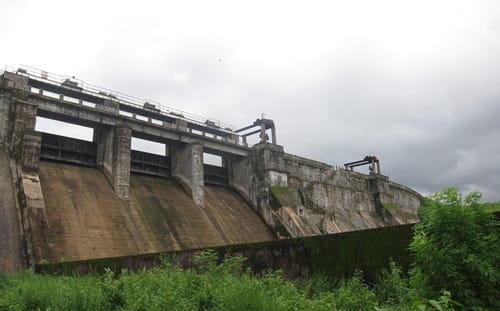
 If you’re planning a Palakkad trip and think the district is only about the Malabar heat and Tamil Nadu border crossings, Kanjirapuzha Dam will genuinely surprise you. Tucked into the foothills of the Western Ghats near Mannarkkad, this reservoir sits surrounded by dense evergreen forest, three small islands, and mountain views that locals still call underrated. Beyond the scenery, it’s also the reason farmland across Palakkad, Mannarkkad, and Ottappalam gets reliable irrigation even in dry months. Here’s everything worth knowing before you go.
Quick Overview
| Detail | Information |
| River | Kanjirapuzha River, a tributary of the Thuthapuzha (which joins the Bharathapuzha) |
| Location | Near Mannarkkad, Palakkad district, Kerala |
| Distance from Mannarkkad | Around 12–15 km |
| Distance from Palakkad | About 34–43 km |
| Nearest Railway Station | Palakkad |
| Nearest Airport | Calicut International Airport, around 86 km away |
| Investigation Started | 1947 |
| Construction Started | 1961 |
| Partially Commissioned | 1980 |
| Dam Type | Earth-cum-masonry dam |
| Catchment Area | Around 7,000 hectares |
| Irrigation Command Area | 9,713 hectares (about 24,000 acres) |
| Surrounded By | Vettilachola evergreen forest |
| Notable Feature | Three islands within the reservoir |
| Visiting Hours | Generally 9:00 or 10:00 AM to 5:00 or 7:00 PM |
| Entry Fee | Around ₹10 per person |
| Best Time to Visit | October to March |
Where Kanjirapuzha Dam Is Located
Kanjirapuzha Dam sits near Mannarkkad, roughly 12 to 15 kilometres from the town, and about 34 to 43 kilometres from Palakkad depending on which source and route you follow. It’s built close to the Agali Hills, positioning it right at the foothills of the Western Ghats, which explains the mountain backdrop that shows up in nearly every photo taken here.
Getting to the dam is straightforward from Mannarkkad, with regular buses and taxis covering the short distance. If you’re arriving by train, Palakkad serves as the nearest railway station, and Calicut International Airport, around 86 kilometres away, remains the closest air link for visitors coming from further afield.
The River Behind This Reservoir
The dam is built across the Kanjirapuzha River, which flows into the Thuthapuzha River, itself a tributary of the Bharathapuzha, Kerala’s second-longest river. This chain of rivers ultimately forms part of the west-flowing river systems that run from Tadri all the way to Kanyakumari, connecting this relatively small reservoir to a much larger regional water network.
What makes Kanjirapuzha’s catchment particularly notable is that it lies entirely within Kerala’s state boundary, spanning roughly 7,000 hectares of densely forested terrain locally known as Vettilachola, an evergreen woodland that gives the reservoir its lush, green surroundings.
A History Spanning Decades of Planning
The story of Kanjirapuzha Dam actually begins well before construction ever started. Detailed investigation into the project began as far back as 1947, with an original cost estimate drawn up in 1954 at around ₹3.65 crore. Actual construction on the dam and its irrigation system finally began in 1961, though the project’s costs eventually rose considerably, being revised to roughly ₹101.19 crore at 1970 price levels.
The irrigation command was partially developed by 1980, covering around 8,465 hectares out of the planned 9,713-hectare target. To complete the remaining irrigation development, a newer initiative called the Extension, Renovation and Modernisation (ERM) Irrigation Project was approved under the Accelerated Irrigation Benefit Programme in 2008, reflecting how this project has continued evolving decades after its initial construction.
The dam’s original purpose was genuinely practical — before its completion, farming in this region depended entirely on rainfall, which was heavy in the catchment area but unevenly distributed across the year. Low-lying lands that could retain moisture managed two crop cycles, while higher-elevation land could only manage one. Kanjirapuzha Dam was designed specifically to smooth out this imbalance, supporting a second crop cycle and supplementing rainfall-dependent farming during the gap between the southwest and northeast monsoons.
What Makes This Dam Genuinely Distinctive
Beyond its irrigation role, Kanjirapuzha Dam supports a well-established commercial fisheries programme operated by Kerala’s Fisheries Department, with the reservoir’s three islands adding both ecological interest and visual appeal. These islands host a variety of marine life, including commercial fish varieties actively cultivated as part of the department’s programme.
The surrounding Vettilachola forest adds genuine ecological value too, providing habitat for a diverse range of plants and animals while framing the reservoir with the kind of dense, green backdrop that makes this spot feel considerably more remote and peaceful than its actual distance from Palakkad would suggest.
What There Is to Do at Kanjirapuzha Dam
A well-maintained garden at the base of the dam forms the heart of the visitor experience, complete with fountains, water bodies, a children’s play area, and shaded shelters for those caught out by sudden weather changes. Boating is offered on the reservoir when water levels allow, with both pedal and row boats available, letting visitors get close to the small islands scattered across the water.
Sunset here has developed a genuinely strong reputation among photographers and casual visitors alike, with the sky turning vivid orange against the mountain silhouette in the background. Evening strolls along the dam’s walkway are popular with families, and a roadside viewpoint just outside the main entrance offers a quick, less crowded photo opportunity if you’re short on time or visiting during a busy period.
For those interested in gardening, several plant nurseries line Kanjirapuzha Road and nearby Mannarkkad, selling saplings of fruit trees, ornamentals, and spices, with local varieties like mango, pepper, and jackfruit generally recommended over exotic imports given how well they thrive in Kerala’s soil.
A Few Honest Practical Notes
It’s worth setting realistic expectations before your visit. Food options directly inside the park tend to be limited to small stalls selling tea, snacks, and Kerala favourites like pazham pori and vada, so if you’re hoping for a proper meal, it’s better to plan for that in Mannarkkad town either before or after your visit. Weekends, particularly after 5 PM, tend to get genuinely crowded, with parking becoming somewhat chaotic during peak hours, so visiting on a weekday or arriving earlier tends to make for a considerably more relaxed experience.
Boating availability also depends heavily on current water levels, and several visitors have noted disappointment when this activity was unavailable due to low reservoir levels during their visit, so it’s worth checking current conditions if boating is a priority for your trip.
Timings and Entry Details
Visiting hours vary slightly depending on the source, with some listing 9:00 AM to 5:00 PM and others citing a later 10:00 AM to 7:00 PM window. Entry costs a modest ₹10 per person, making this a genuinely affordable outing regardless of group size.
Best Time to Plan Your Visit
October through March offers the most pleasant weather for visiting, with comfortable temperatures making boating, garden walks, and evening strolls genuinely enjoyable. Monsoon season, from June to September, brings the dam to its fullest and greenest state, though pathways around the reservoir can get slippery during heavier rain. Summer months, particularly April and May, get considerably hotter during the day, so visiting after 5 PM tends to work better if you’re travelling during this period.
Frequently Asked Questions
Q1. Is boating always available at Kanjirapuzha Dam?
Not guaranteed. Boating depends on current water levels in the reservoir, and several visitors have reported it being unavailable during periods of low water, so it’s worth checking current status before planning your trip specifically around this activity.
Q2. What’s the best time of day to visit for photography?
Sunset is consistently recommended, with the sky turning vivid orange against the mountain backdrop, making it one of the most photographed moments at the dam. Early morning also offers a quieter, misty alternative if you prefer fewer crowds.
Q3. Are there good dining options available directly at the dam?
Options inside the park are limited to small stalls selling snacks, tea, and light Kerala treats like pazham pori. For a proper meal, it’s better to plan on eating in Mannarkkad town before or after your visit.
Q4. Is Kanjirapuzha Dam suitable for a family day trip with children?
Yes, genuinely well suited. The garden includes a dedicated children’s play area with swings and slides, along with occasional weekend vendor activities, making it a solid choice for families looking for a relaxed outdoor outing.