 By Sanjeev Sinha
 If you’ve ever wondered how North Karnataka’s drought-prone districts turned into productive farmland, or why the Krishna water dispute between three states kept making headlines for decades, Almatti Dam sits right at the centre of that story. This is Karnataka’s largest dam by storage capacity, the anchor of a project that took over four decades to complete, and today, a genuinely popular tourist destination with landscaped gardens and a musical fountain that draws families from across Bagalkot and Vijayapura. Here’s the complete picture before you plan your visit.
Quick Overview
| Detail | Information |
| Also Known As | Lal Bahadur Shastri Dam / Lal Bahadur Shastri Sagar |
| River | Krishna River |
| Location | Border of Bagalkot and Vijayapura districts, Karnataka |
| Distance from Bagalkot | Around 25–66 km (sources vary) |
| Distance from Vijayapura | About 40–65 km |
| Nearest Railway Station | Almatti Railway Station, roughly 6–7 km away |
| Nearest Airport | Hubballi Airport, around 150–200 km away |
| Foundation Laid | 22 May 1964, by then PM Lal Bahadur Shastri |
| Completed | July 2005 |
| Status | Karnataka’s largest dam by storage capacity |
| Gross Storage Capacity | Around 123.08 TMC (with plans to expand toward 200 TMC) |
| Power Generation | 290–297 MW installed capacity |
| Villages Affected | Over 130 villages submerged during construction |
| Visiting Hours | Generally 9:00 AM to 6:00 PM; gardens open until 7:00 PM |
| Entry Fee | Free for the dam; ₹20–₹50 for gardens and special attractions |
| Best Time to Visit | October to February |
Where Almatti Dam Is Located
Almatti Dam sits right on the border between Bagalkot and Vijayapura districts in North Karnataka, with large stretches of Bagalkot territory having been submerged when the reservoir filled. Distances to the dam vary noticeably depending on the source, ranging anywhere from 25 to 66 kilometres from Bagalkot town, so it’s worth confirming the exact route based on your starting point.
Almatti Railway Station, situated between Vijayapura and Bagalkot, serves as the most convenient rail connection, just 6 to 7 kilometres from the dam itself. Hubballi Airport remains the nearest air link, though it sits a considerable distance away at around 150 to 200 kilometres, making road travel the more practical option for most visitors coming from within Karnataka.
The River Behind This Massive Reservoir
The dam is built across the Krishna River, one of peninsular India’s most significant waterways, and it forms the centrepiece of the Upper Krishna Irrigation Project, commonly known as UKP. This project was specifically designed to bring water security to some of Karnataka’s most drought-prone districts, including Vijayapura, Bagalkot, Kalaburagi, Yadgir, and Raichur.
Water regulated at Almatti eventually flows into the Narayanpur reservoir downstream, continuing to serve irrigation needs further along the Krishna’s course, making this dam an essential upstream link in a much larger regional water management chain.
A History Spanning Four Decades
The foundation stone for the Upper Krishna Project was laid on 22 May 1964 by then Prime Minister Lal Bahadur Shastri, whose name the dam now carries. What followed, though, was an extraordinarily long construction timeline. The project took 42 years to complete, with Almatti Dam itself finally finished in July 2005, a gap that reflects the genuine complexity, funding challenges, and interstate water disputes that repeatedly delayed progress.
The project’s water allocation stems from the Krishna Water Disputes Tribunal headed by R.S. Bachawat in May 1976, which granted Karnataka rights to a substantial share of Krishna river water. Decades later, the Brijesh Kumar Tribunal further resolved ongoing disputes between Andhra Pradesh, Karnataka, and Maharashtra, authorising the dam’s full reservoir level to be raised significantly, from an originally Supreme Court-restricted 160 feet MSL toward 524 feet MSL, nearly doubling its planned storage capacity.
This expansion came at a genuine human cost. Construction and subsequent reservoir filling affected 201 villages, with 136 of them completely submerged in the backwaters. Thousands of farmers lost land to the rising water, and the displacement led to the creation of an entirely new settlement, Bagalkot Navanagar, to resettle affected communities. It’s worth acknowledging this honestly rather than glossing over it, since it represents a real and significant part of the dam’s story alongside its economic benefits.
What Almatti Dam Does Today
Once completed, Almatti’s canal network began irrigating well over 500,000 hectares of previously drought-affected land, fundamentally transforming agricultural productivity across the region. Lift irrigation schemes, including the Sonna and Rolli-Mannikeri projects, extend this water supply to higher elevations, enabling farmers to grow multiple crop cycles per year where drought had once made even single-season farming unreliable.
The dam’s power station, fitted with vertical Kaplan turbines including five 55 MW generators and one 15 MW generator, contributes meaningfully to Karnataka’s electricity grid, with target annual output reaching around 560 to 713 million units depending on the source consulted. The reservoir also supports fisheries and has become an unexpected haven for wildlife, with over 2,000 flamingoes reported in the Almatti backwaters during certain seasons, alongside a broader range of migratory birds.
What There Is to See and Do
Almatti has developed into a genuinely well-rounded tourist destination over the years. Landscaped gardens including the Rock Garden, Japanese Garden Lake, Lava Kusha Park, Gopala Krishna Park, and a Mughal-style garden across the water all offer distinct settings for a relaxed walk or family picnic. In the evenings, a musical fountain and light show near the Mughal garden draws a steady crowd, particularly appealing during cooler months when an evening walk feels genuinely pleasant.
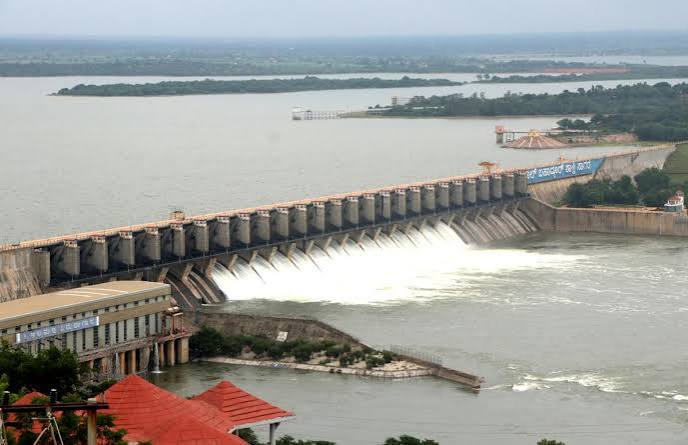
Boating is available on the reservoir during post-monsoon months, subject to safety conditions and water levels. The KSTDC Mayura Krishna resort, perched on a hill overlooking the dam, backwaters, and the garden across the shore, offers one of the best vantage points in the area, particularly recommended during monsoon when the dam’s gates are open and water release creates a genuinely dramatic sight.
Beyond the dam itself, the surrounding region offers rich heritage options, with Kudalasangama, the sacred confluence of the Krishna and Malaprabha rivers, sitting just 15 kilometres away, and UNESCO World Heritage sites like Badami, Pattadakal, and Aihole all within reasonable driving distance for those extending their trip.
Timings and Entry Details
Most current sources place general dam visiting hours between 9:00 AM and 6:00 PM, with the surrounding gardens staying open until around 7:00 PM. The musical fountain and light show typically runs from 7:00 to 8:00 PM in the evening. Entry to the dam itself is free, while gardens and special attractions carry a modest charge, generally ranging between ₹20 and ₹50.
Best Time to Plan Your Visit
October through February offers the most comfortable weather for exploring Almatti’s gardens, viewpoints, and boating options, with pleasant temperatures making extended outdoor time genuinely enjoyable. That said, monsoon season has its own distinct appeal, since witnessing the dam’s spillway gates open during heavy inflow is consistently described as one of the most memorable experiences here, even if the weather itself can occasionally disrupt outdoor plans.
Frequently Asked Questions
Q1. Why did it take over 40 years to complete the Upper Krishna Project and Almatti Dam?
The project faced repeated delays due to funding challenges, interstate water disputes between Karnataka, Andhra Pradesh, and Maharashtra, and the complexities of resettling affected communities, stretching a project that began in 1964 all the way to Almatti’s completion in 2005.
Q2. Is boating available year-round at Almatti Dam?
No, boating is generally offered during post-monsoon months and remains subject to current safety conditions and water levels, so it’s worth checking availability locally before planning your visit specifically around this activity.
Q3. What’s the best time to see Almatti Dam’s spillway gates in action?
Monsoon season, particularly during periods of heavy inflow, offers the best chance to witness the dam’s gates open, creating a genuinely dramatic display of water release that many visitors consider the highlight of a monsoon visit.
Q4. Can I combine an Almatti Dam visit with nearby heritage sites in one trip?
Yes, easily. Kudalasangama sits just 15 kilometres away, while the UNESCO World Heritage sites of Badami, Pattadakal, and Aihole are all within a reasonable driving distance, making it simple to build a fuller multi-day itinerary around a Bagalkot base.