 By Sanjeev Sinha
 If you’ve scrolled through Instagram reels of a misty lake near Panvel with hills in the background, you’ve almost certainly seen “Gadeshwar Dam.” What most visitors don’t realise is that the spot everyone photographs isn’t actually the main drinking-water dam at all — it’s a British-era weir downstream from the real reservoir. Genuinely one of the more interesting naming mix-ups in Navi Mumbai tourism, and worth understanding properly before you make the drive. Here’s the full picture.
Quick Overview
| Detail | Information |
| Also Popularly Known As | Gadeshwar Weir (British-era structure most visitors actually see) |
| Actual Main Reservoir | Dehrang Dam, built 1964 |
| River | Gadhi River |
| Location | Near Nere village, off Matheran Road, Panvel, Raigad district |
| Distance from Panvel Station | Around 7–20 km (sources vary by exact route) |
| Distance from Mumbai | About 1.5–2 hours by road |
| Nearest Railway Station | Panvel Junction (Harbour/Central Line) |
| Nearest Airport | Navi Mumbai International Airport (Ulwe), around 15 km from New Panvel |
| Maintained By | Panvel Municipal Corporation |
| Access to Main Dehrang Dam | Strictly restricted, not open for tourism |
| Access to Popular Weir Site | Publicly accessible, though subject to monsoon police restrictions |
| Best Time to Visit | Monsoon season, June to September |
Where Gadeshwar Dam Is Located
The site popularly called Gadeshwar Dam sits near Nere village, off Matheran Road, roughly 7 to 20 kilometres from Panvel depending on which route and starting point you use. Getting here from Mumbai typically takes 1.5 to 2 hours via the Mumbai-Goa highway to Panvel.
The most commonly cited route goes through Kalamboli, then Panvel city, taking a left toward Old Panvel and continuing along Matheran Road past Nere village and Mahalaxmi Nagar, before reaching Gadeshwar Temple and the dam site itself, about 2 kilometres further along the same road, sometimes called Dudhani Road since local buses run up to Dudhani village. Panvel Junction serves as the nearest railway station, with taxis, share-autos, or local buses covering the remaining distance.
The Genuinely Important Naming Confusion You Should Know
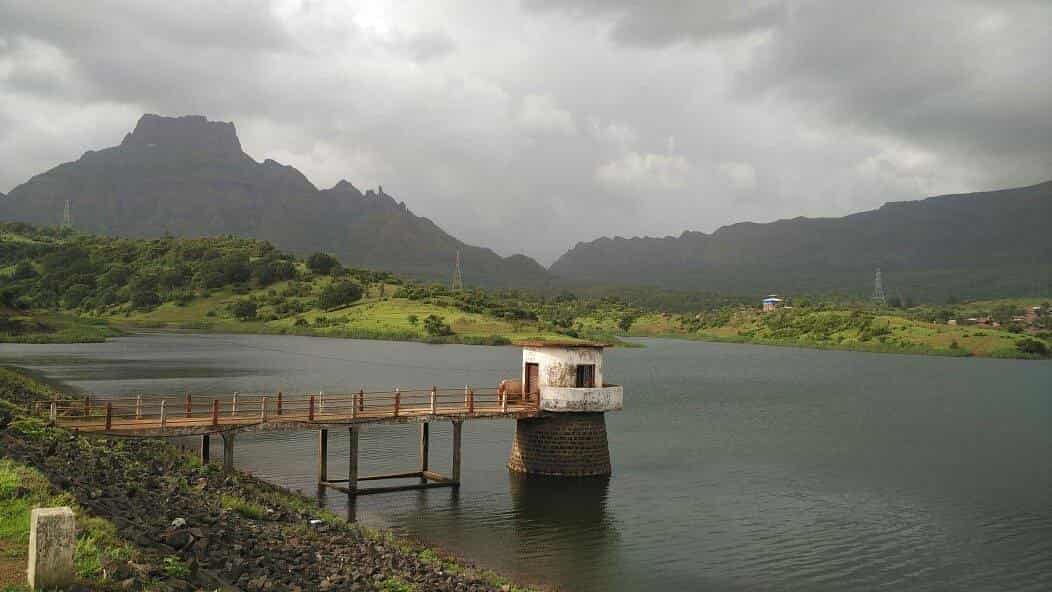
This is easily the most important thing to understand before visiting. The location shown in countless monsoon reels and Google-tagged as “Gadeshwar Dam” is actually a British-era weir, built pre-independence to regulate river overflow and support irrigation. It sits downstream, is easily visible from the road, and has become the go-to picnic and photography spot precisely because it’s accessible and scenic.
The real drinking-water reservoir for Old Panvel, however, is the Dehrang Dam, built in 1964 and located about 1.8 kilometres further upstream. This is a restricted zone, strictly off-limits for tourism or recreation, given its role as an active municipal water source. Because of incorrect map tagging and years of social media promotion, most visitors genuinely believe they’re standing at the dam supplying water to thousands of Panvel residents, when they’re actually at a structure originally meant purely for flow regulation.
The River Behind Both Structures
Both the popular weir and the restricted Dehrang Dam draw from the Gadhi River, a waterway feeding this stretch of the Sahyadri foothills near Panvel. Water overflowing from Dehrang Dam collects downstream, forming the reservoir that most visitors now recognise as “Gadeshwar Dam,” surrounded by paddy fields and the peaks of Chanderi and Matheran hills.
This connection between the two structures is exactly why the area functions as one interconnected water system rather than two separate, unrelated dams, even though the tourism experience and the actual water infrastructure are genuinely two different things.
A History Rooted in Panvel’s Growing Water Needs
The Dehrang Dam’s construction in 1964 was purely about securing reliable drinking water for a growing Old Panvel, at a time when the focus was entirely on water management infrastructure rather than tourism. The downstream Gadeshwar Weir predates this, built during the British era specifically to manage river flow and support local irrigation.
Over the decades, as Panvel’s population expanded and social media turned scenic monsoon spots into shareable content, the accessible weir site gradually became a genuine tourism draw, while the actual reservoir upstream remained exactly what it was always meant to be — functional, restricted infrastructure. As Panvel Municipal Corporation works on projects to better capture overflow from Dehrang Dam to address summer water shortages, stricter rules and controlled access at the popular site may well increase in the years ahead.
What There Is to See and Do
Despite the naming mix-up, the popular Gadeshwar site genuinely delivers a good day out. The large water body, framed by hills and surrounded by lush greenery, becomes especially vibrant during monsoon, drawing crowds for picnicking, boating in some seasons, camping, and casual swimming, though this last activity carries genuine safety risks given the lack of formal supervision.
Birdwatching is a genuine highlight here too, with the surrounding forest and water attracting a good variety of species, particularly rewarding for early risers. The 800-year-old Gadeshwar Mahadev Temple, passed en route, adds a worthwhile spiritual stop, and the smooth tarmac road leading to the dam has made this stretch a genuinely popular route for bikers and cyclists doing group rides from Mumbai and Navi Mumbai. Adventurous visitors sometimes continue beyond the dam toward Dudhani village, where locals describe an even more scenic, less-visited stretch further along the same road.
Practical Realities Worth Knowing
Visitor feedback consistently flags a few things worth setting expectations around. The site gets genuinely crowded during peak monsoon weekends, sometimes with visitors drinking and loitering, which can affect the peaceful atmosphere many come here specifically seeking. Food options are limited, so carrying your own snacks is a sensible backup rather than assuming you’ll find much on-site. Given that this remains a functional water structure rather than a fully developed tourist destination, safety checks and access restrictions can tighten unexpectedly, especially during heavy monsoon or following any accidents in the area.
Outside visitors aren’t permitted into the actual dam structure itself, and it’s worth respecting posted restrictions rather than pushing past them, both for your own safety and out of consideration for the site’s genuine function as water infrastructure.
Timings and Access Details
There’s no strict, formally published visiting-hours system for the popular weir site, though daylight hours are clearly the sensible window given both safety considerations and the area’s limited lighting after dark. Weekday visits, particularly Wednesdays and Thursdays, tend to offer a considerably quieter experience than weekends, and some nearby campsites reportedly offer better deals midweek if you’re planning an overnight stay.
Best Time to Plan Your Visit
Monsoon season, roughly June through September, is unquestionably the peak window, when the reservoir fills, waterfalls appear on the surrounding hills, and the entire landscape turns a vivid green that’s made this spot such a social-media favourite. If you’d prefer a quieter, less crowded experience, visiting just after monsoon or on a weekday during the season offers a similar scenic payoff without the heaviest crowds.
Frequently Asked Questions
Q1. Is the popular “Gadeshwar Dam” actually the real drinking-water dam for Panvel?
No, genuinely not. The spot most visitors photograph and tag online is a British-era weir downstream, while the actual drinking-water reservoir, Dehrang Dam, sits about 1.8 kilometres upstream and is strictly restricted from public access.
Q2. Is it safe to swim at the popular Gadeshwar site?
It’s commonly done by visitors, especially during monsoon, but there’s no formal supervision or lifeguard presence, so it carries genuine safety risks. It’s worth exercising real caution, especially with children, given the lack of official safety infrastructure.
Q3. Can I combine a visit here with other nearby attractions?
Yes, easily. Ballaleshwar Temple in Pali, Prabalgad Fort for trekking, Khandeshwar Lake, and Adai Waterfall (especially post-monsoon) are all reasonably close by, making it simple to build a fuller day trip around this area.
Q4. Why does access to this area sometimes tighten unexpectedly during monsoon?
Since the site sits close to restricted municipal water infrastructure and has occasionally seen safety incidents, police restrictions can increase during peak monsoon weekends or following any accidents, so it’s worth checking current access conditions before planning your trip.