 By Sanjeev Sinha
 If you’ve ever seen a photo of Munnar with tea gardens reflecting perfectly in still blue water, there’s a good chance it was taken at Mattupetty. This isn’t just another scenic stop on the Munnar sightseeing circuit — it’s a working hydroelectric dam that’s earned itself the nickname “Switzerland of Kerala,” and for good reason. Whether you’re planning a honeymoon trip, a family holiday, or a solo backpacking route through the Western Ghats, understanding what Mattupetty actually offers helps you plan a visit that doesn’t just tick a box but genuinely delivers.
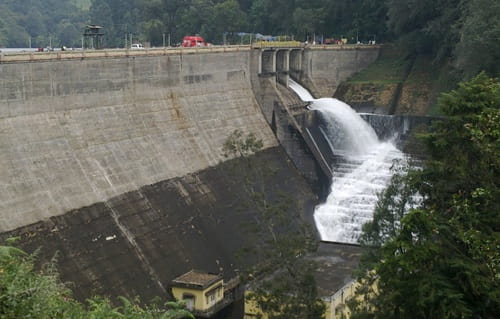
Mattupetty Dam, Munnar Quick Overview
| Detail | Information |
| Location | Mattupetty, Idukki district, Munnar, Kerala |
| Distance from Munnar Town | Around 10–13 km |
| Nearest Railway Station | Ernakulam/Aluva, roughly 115–120 km away |
| Nearest Airport | Kochi International Airport, about 117 km away |
| Dam Type | Concrete gravity dam |
| Built | 1953, under the Pallivasal Hydro-electric Project |
| Purpose | Water conservation and hydroelectric power generation |
| Dam Height | Around 85 metres |
| Dam Length | Roughly 237–238 metres |
| Reservoir Name | Mattupetty Lake |
| Water Storage Capacity | About 55.4 million cubic metres |
| Altitude | Around 1,700 metres above sea level |
| Visiting Hours | Generally 9:00 AM to 5:00 PM daily |
| Entry Fee | Around ₹10–₹20 per person; boating charged separately |
| Nickname | “Switzerland of Kerala” |
Where Mattupetty Dam Is Located
Mattupetty sits roughly 10 to 13 kilometres from Munnar town, tucked into the hills of Idukki district near the Anamudi peak region. It’s high altitude, at nearly 1,700 metres above sea level, which explains why the air here feels noticeably cooler than most other parts of Kerala, even during the warmer months.
Reaching Mattupetty is straightforward once you’re in Munnar — a short cab or taxi ride of around thirty minutes gets you there comfortably. If you’re travelling from further afield, Kochi serves as your main gateway, with both the nearest airport and railway station located roughly 115 to 120 kilometres away, meaning most visitors treat Mattupetty as a day trip from a Munnar base rather than a standalone destination.
The Landscape Behind the Reservoir
Unlike many of Kerala’s dams that sit across a single major river, Mattupetty was built primarily to support the Pallivasal Hydro-electric Project, harnessing water from the surrounding high-altitude catchment area for power generation. The result is Mattupetty Lake, a reservoir that spreads across roughly 323 hectares and draws from a catchment area of about 105 square kilometres.
What makes this lake genuinely special is that it’s perennial — it never fully dries up, even during Kerala’s hottest summers, though it does swell considerably during monsoon when rainfall adds significantly to its volume. That year-round water availability is exactly why the area has become such a magnet for wildlife, with elephants, birds, and other animals relying on it as a dependable water source throughout the year.
A Brief History of the Dam
Mattupetty Dam was constructed in 1953 as part of the broader Pallivasal Hydro-electric Project, one of Kerala’s earlier efforts at organised hydroelectric power generation in the high ranges. Built using concrete in sections that can function independently of one another, the dam was engineered specifically to hold back a substantial volume of water for consistent power supply to the region.
Over the decades, what started purely as an infrastructure project for electricity generation gradually became one of Munnar’s defining tourist attractions, almost entirely because of how naturally photogenic the setting turned out to be. Today, it remains functional for power generation while simultaneously drawing thousands of visitors purely for its scenery and recreational activities.
What Makes a Visit to Mattupetty Worthwhile
The still, mirror-like surface of Mattupetty Lake reflecting the surrounding tea plantations is the single biggest draw here, and it’s genuinely one of the most photographed spots in all of Munnar. Boating is the heart of the experience, with the District Tourism Promotion Council of Idukki operating several options — speed boats for those chasing a bit of adrenaline, pedal and row boats for couples and families wanting a slower pace, and shikara rides that bring a touch of Kashmir-style luxury to the Western Ghats.
Beyond the water, a short drive takes you to Elephant Arrival Point, where wild elephants are frequently spotted coming down to drink, and the famous Echo Point, where shouting toward the misty hills genuinely sends your voice bouncing back in a surprisingly clear echo. For those who’d rather explore on foot, the surrounding Shola forests offer excellent trekking routes and reward birdwatchers with sightings of several endemic species found only in this part of the Western Ghats.
A walk across the dam itself is worth setting aside time for too — the road built atop it gives you a genuine sense of the structure’s scale while offering panoramic views over both the lake and the hills beyond. Nearby, the Om Saravana Bhavan Temple, dedicated to Lord Murugan, adds a quiet spiritual stop to the itinerary for those interested.
Timings and Entry Fees
Most current sources place general entry hours between 9:00 AM and 5:00 PM daily, with a small entry fee typically ranging from ₹10 to ₹20 per person depending on the source and any recent revisions. Boating operates within a slightly narrower window, generally starting around 8:30 or 9:30 AM and wrapping up by 5:00 PM, with the last trip usually departing around 4:30 PM. Some operators also pause boating during lunch hours, roughly between 12:00 PM and 2:00 PM, so it’s worth timing your visit accordingly if a boat ride is a priority.
Boating charges apply separately from the entry fee, and pricing varies by boat type — ordinary boats, speedboats, and larger group boats all carry different rates, with life jackets provided as standard safety equipment. A horse ride along the lake’s edge is also available for a nominal fee if you’re travelling with kids who might enjoy the extra activity.
Best Time to Visit
Winter, from December through February, is widely considered the best season, bringing cool, pleasant weather and excellent visibility for both boating and photography. This is also when migratory birds, including the occasional Siberian crane, make an appearance around the lake. Monsoon season transforms the entire landscape into a lush, waterfall-dotted paradise, though boating conditions can vary depending on rainfall intensity. Summer, while warmer, often comes with lower entry and boating charges, making it a reasonable option for budget-conscious travellers who don’t mind slightly reduced water levels.
Frequently Asked Questions
Q1. How much time should I set aside for a Mattupetty Dam visit?
Around two to three hours works well for most visitors, covering the dam walk, boating, and a stop at nearby viewpoints like Echo Point, without feeling rushed.
Q2. Is boating available every day at Mattupetty?
Yes, boating generally runs daily within the 8:30 AM to 5:00 PM window, though it may pause during lunch hours and isn’t typically operated during heavy rain for safety reasons.
Q3. Can I combine Mattupetty Dam with other nearby attractions in one day?
Absolutely — Echo Point, Elephant Arrival Point, and Kundala Dam Lake are all within a reasonable driving distance and are commonly combined into a single day’s sightseeing from Munnar.
Q4. Is Mattupetty Dam suitable for families with young children?
Yes, the pedal and row boats are gentle enough for families, and the horse ride option along the lake adds an extra activity that younger children usually enjoy.