 By Sanjeev Sinha
 If you’ve grown up in Bilaspur, chances are your first family picnic memory involves Khutaghat Dam. This is genuinely the district’s most-loved weekend escape, with a name that comes from a surprisingly practical bit of forest history, a colonial-era rest house perched on a hillock, and a “mirror effect” over the water that’s made it one of Chhattisgarh’s most photographed reservoirs. Here’s everything worth knowing before you plan your visit.
Quick Overview
| Detail | Information |
| River | Kharang River (some sources also cite Arpa or Kharun) |
| Location | Near Ratanpur, Bilaspur district, Chhattisgarh |
| Distance from Ratanpur | Around 10–12 km |
| Distance from Bilaspur | Around 30–33 km |
| Nearest Railway Station | Bilaspur Junction, around 33 km |
| Nearest Airport | Bilaspur Airport (Chakarbhata), around 45 km |
| Built | Early 20th century (sources cite 1926); some accounts cite 1961 |
| Name Origin | “Khuntas” — submerged wooden tree stumps left after flooding the forest |
| Primary Purpose | Irrigation for the surrounding drought-prone region |
| Nearby Heritage | Ratanpur Fort and ruins, former capital of the Kalachuri dynasty |
| Entry Fee | Around ₹10–20 per person; parking ₹20–50 |
| Visiting Hours | Generally 6:00 AM to 7:00 PM |
| Best Time to Visit | August to December, especially post-monsoon |
Where Khutaghat Dam Is Located
Khutaghat Dam sits roughly 10 to 12 kilometres from Ratanpur, the historic former capital of the Kalachuri dynasty, and about 30 to 33 kilometres from Bilaspur city itself. The dam is easily reached via the Bilaspur-Ambikapur highway, making it a genuinely convenient half-day trip whether you’re starting from Bilaspur or already exploring Ratanpur’s ancient ruins.
Bilaspur Junction serves as the closest major railway station, with Bilaspur Airport at Chakarbhata offering regular flights to cities including Delhi, Kolkata, Prayagraj, and Jabalpur under the UDAN scheme, making this destination reasonably accessible even for visitors travelling from further afield.
The River Behind This Popular Reservoir
Sources genuinely differ on which exact river feeds Khutaghat Dam, with the Kharang River cited most consistently across tourism guides, though some sources also mention the Arpa or Kharun rivers. Regardless of the precise waterway, the reservoir sits surrounded by the rugged hills of the Vindhyan range and thick forest cover, creating a landscape that feels genuinely far removed from Bilaspur’s urban bustle.
This water source has historically served as a vital irrigation lifeline for the surrounding region, an area often associated with Chhattisgarh’s identity as “Dhan Ka Katora,” or the Bowl of Rice, given the state’s significant rice cultivation.
A History Rooted in a Genuinely Charming Local Legend
Khutaghat Dam’s construction dates back to the early 20th century, with some sources specifically citing 1926, though others describe a later completion around 1961, likely reflecting different phases of development or expansion over the decades. Either way, the dam has served the region for the better part of a century, addressing water scarcity in what was historically a drought-prone stretch of Chhattisgarh.
What’s genuinely delightful about this dam is the story behind its name. When the area was originally flooded to create the reservoir, the surrounding forest wasn’t entirely cleared beforehand, and the submerged tree stumps, known locally as “khuntas,” remained standing beneath the water. Local fishing boats would frequently strike these hidden stumps while navigating the reservoir, and over time, the site came to be called “Khuntaghat,” eventually evolving into today’s “Khutaghat.” Local lore even specifically mentions the tendu tree as among the last and toughest stumps, so strong that only a firm axe blow could finally cut it down once the dam eventually dried in parts.
Why Khutaghat Has Become Bilaspur’s Favourite Weekend Spot
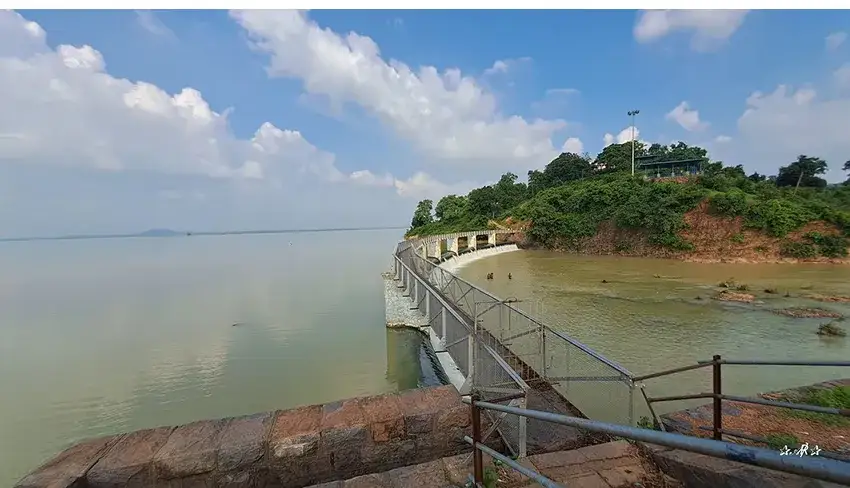
What genuinely sets Khutaghat apart from a purely functional irrigation dam is its striking visual appeal. The reservoir’s blue water, set against the green backdrop of forested hills, creates a genuinely photogenic “mirror effect” that’s made this one of the most Instagram-worthy spots in the entire Bilaspur district. A well-maintained garden near the dam entrance adds to the appeal, complete with play areas for children, making it a genuinely stress-free outing for parents.
Perched on a hillock overlooking the water sits a colonial-era rest house, offering a panoramic view of the entire reservoir. This structure adds a genuine historical layer to what’s otherwise primarily known as a scenic getaway, and it remains one of the best vantage points for taking in the dam’s full scale.
What There Is to Do at Khutaghat Dam
Boating remains one of the standout activities here, letting visitors glide across the tranquil waters while soaking in the surrounding hills and forest. The site is also genuinely popular among photographers and painters, given how the wide skies reflect so clearly off the reservoir’s surface, creating compositions that regularly show up in local art and photography circles.
Fishing draws local fishermen to the reservoir’s calmer stretches, and the surrounding landscape supports a genuine variety of flora and fauna, rewarding nature enthusiasts willing to explore beyond just the main viewpoint. Family picnics in the garden remain the most common way visitors spend their time here, often combined with a trip to the nearby Ratanpur ruins, given how close the two destinations sit to each other.
Combining Khutaghat With Nearby Attractions
Since Khutaghat sits so close to Ratanpur, it’s genuinely easy to build a fuller day trip around both destinations. Mahamaya Temple in Ratanpur, roughly 10 kilometres from the dam, and Ratanpur Fort, about 12 kilometres away, offer a rich dose of history from the Kalachuri dynasty’s former capital. Ramtekri Temple, Kanan Pendari Zoo, and even the more distant Achanakmar Wildlife Sanctuary all sit within reasonable driving distance for those wanting to extend their trip further into the region.
Practical Realities Worth Knowing
Entry to Khutaghat Dam typically costs around ₹10 to ₹20 per person, covering maintenance of the garden and dam area, with vehicle parking charged separately, generally ranging from ₹20 for bikes to ₹50 for cars. If you’re travelling from outside the region and want to stay overnight, the Chhattisgarh government has built a Tourist Rest House right above the dam, bookable through the official Chhattisgarh Tourism website.
Safety deserves genuine attention here too. Several sections of the dam lack railings, so it’s worth keeping a close eye on children near the water’s edge rather than assuming barriers exist throughout. It’s also advisable to avoid visiting during very heavy rainfall, since the approach highway can occasionally turn slippery under those conditions.
Timings and Best Time to Visit
Khutaghat Dam is generally open daily from 6:00 AM to 7:00 PM, with the entrance area reasonably well-lit, though daylight visits remain the better choice for actually enjoying the scenery. August through December stands out as the recommended window, particularly right after monsoon, when the reservoir typically overflows and looks genuinely at its most impressive, a phenomenon local visitors specifically look forward to each year.
Frequently Asked Questions
Q1. Why is the dam called “Khutaghat”?
The name comes from “khuntas,” the wooden tree stumps left submerged in the water after the surrounding forest was flooded during the dam’s original construction. Fishing boats would frequently strike these stumps, and over time, locals began calling the reservoir Khuntaghat, which eventually became Khutaghat.
Q2. Is it safe to visit Khutaghat Dam with young children?
It can be, but caution is genuinely necessary since certain sections of the dam lack safety railings near the water’s edge. Keeping a close eye on children throughout your visit is essential rather than assuming barriers are present everywhere.
Q3. Can I stay overnight near Khutaghat Dam instead of visiting for just a few hours?
Yes, the Chhattisgarh government has built a Tourist Rest House right above the dam, which can be booked through the official Chhattisgarh Tourism website, making an overnight stay genuinely possible if you’d like to extend your visit beyond a quick day trip.
Q4. What’s the best time of year to see the dam at its most impressive?
August through December, particularly right after monsoon, is widely recommended, since this is when the reservoir typically overflows and the surrounding hills look their greenest, giving you the most dramatic version of Khutaghat’s famous “mirror effect.”