 By Sanjeev Sinha
 If you’re a Jaipur local tired of the same weekend spots, Kanota Dam offers something genuinely different — a quiet reservoir just off the Agra Highway, framed by village life rather than tourist crowds, with a historic fort right next door. This isn’t one of Rajasthan’s famous, heavily documented water projects, but it’s exactly the kind of low-key escape that’s earned a loyal following among Jaipur residents looking for a half-day break from the Pink City’s hustle. Here’s everything worth knowing.
Quick Overview
| Detail | Information |
| River | Dhundh River |
| Location | Near Kanota village, Bassi tehsil, Jaipur district, Rajasthan |
| Distance from Jaipur City | Around 15–20 km |
| Approach Road | Jaipur-Agra Highway (NH21/NH11) |
| Nearest Airport | Jaipur International Airport |
| Constructed | Mid-20th century |
| Primary Purpose | Irrigation and drinking water supply for nearby villages |
| Nearby Heritage Site | Kanota Fort / Castle Kanota |
| Recent Development | ₹2.5 crore approved by Rajasthan Chief Minister for tourism development |
| Popular Activities | Boating, cycling, fishing, picnicking, photography |
| Overnight Stay Option | Kanota Camp Resort |
| Visiting Hours | Generally open all day |
| Best Time to Visit | October to March; monsoon for fuller reservoir |
Where Kanota Dam Is Located
Kanota Dam sits near Kanota village in Bassi tehsil, roughly 15 to 20 kilometres from Jaipur city, right beside the busy Jaipur-Agra Highway. This makes it one of the more conveniently located dams near a major Indian city, reachable in just 30 to 45 minutes by private car depending on traffic.
Getting here is genuinely straightforward. A private car or taxi from Jaipur remains the most comfortable option, though local buses running toward nearby villages also pass through or stop close to Kanota, offering a more budget-friendly, authentic way to travel if you’re not in a rush. Jaipur International Airport serves as the nearest air link for visitors coming from outside the state.
The River Behind This Village Reservoir
The dam is built across the Dhundh River, one of several smaller rivers flowing through Jaipur district alongside better-known waterways like the Banganga and Bandi. While the Dhundh doesn’t carry the scale or historical documentation of Rajasthan’s larger rivers, it’s played a genuinely important local role, supporting irrigation and drinking water needs for the villages surrounding Kanota for decades.
Rajasthan’s semi-arid climate has historically demanded creative water-harvesting solutions, and dams like Kanota reflect exactly that tradition — smaller-scale, practical structures built to secure water security for specific communities rather than sprawling, multi-district irrigation networks.
A History Rooted in Rajasthan’s Water Conservation Legacy
Kanota Dam was constructed during the mid-20th century, primarily to serve as a reservoir supporting irrigation and drinking water supply for nearby villages and agricultural land. Its story is closely tied to Rajasthan’s broader legacy of water management, a state where harvesting and preserving water has always been a genuine necessity rather than an optional consideration.
The dam sits near Kanota village, historically part of the princely state of Jaipur, and its construction reflects the foresight of local rulers and engineers in addressing water scarcity in this semi-arid region. Over the decades, what began purely as functional infrastructure has gradually transformed into something considerably more — a genuine tranquil retreat that locals and visitors alike now associate as much with leisure as with irrigation.
Why Kanota Dam Is Getting Fresh Attention
This is a genuinely current and encouraging development worth knowing about. The Rajasthan Chief Minister recently approved ₹2.5 crore for the development of the Kanota Dam area specifically for tourism purposes, signalling that this quieter, less-commercialised destination is being positioned for a more developed visitor experience in the years ahead. If you’ve been meaning to visit before infrastructure changes potentially bring more crowds and formal ticketing, now is genuinely a good time.
What Makes Kanota Dam Worth the Short Drive
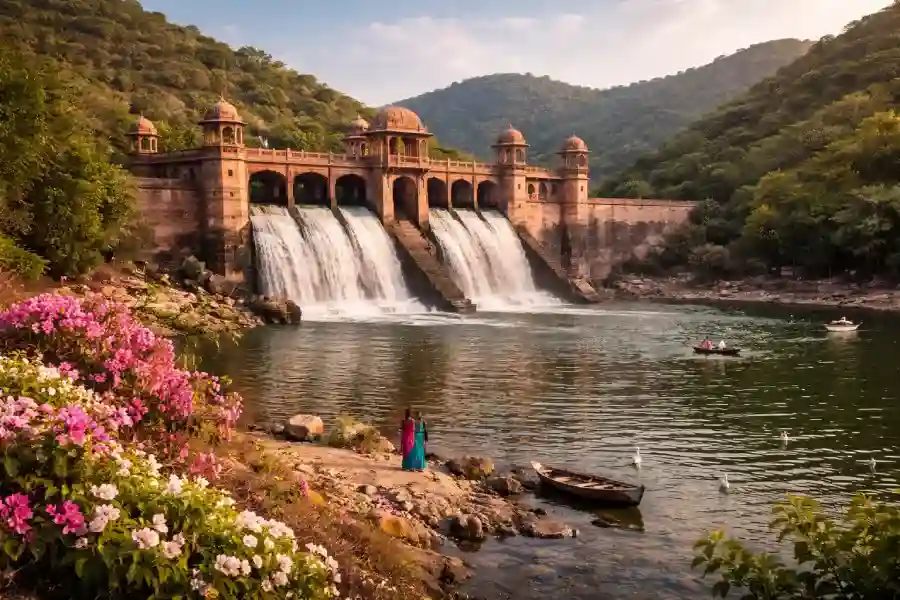
Unlike Jaipur’s famous, often-crowded tourist attractions, Kanota Dam offers a quieter alternative surrounded by lush greenery and calm waters. Sunrise and sunset here are consistently described as the most rewarding times to visit, with the lake reflecting golden hues that photographers and casual visitors alike find genuinely captivating.
Birdwatchers have plenty to look forward to as well, particularly during migratory seasons, when various species pass through the area, adding a rewarding dimension for anyone patient enough to sit quietly by the water. The overall atmosphere here leans toward peaceful reflection rather than bustling tourist activity, making it a genuine favourite for couples seeking a quiet getaway and families wanting a relaxed picnic spot away from the city’s noise.
What There Is to Do at Kanota Dam
Boating is available here, occasionally adding to the charm of a visit, though it’s worth checking current availability given the dam’s more modest, less commercially developed tourism infrastructure compared to bigger reservoirs. Cycling and bike tours around the dam’s surrounding countryside have also grown in popularity, along with fishing for those wanting a slower-paced activity by the water’s edge.
Open spaces near the lake make this a genuinely solid spot for day picnics, and many visitors bring home-cooked food to enjoy in a relaxed outdoor setting rather than relying on limited dining options nearby. For those wanting to extend beyond a day trip, the nearby Kanota Camp Resort offers camping facilities, bonfires, and traditional Rajasthani meals, letting visitors experience an overnight stay under the stars, typically priced from around ₹2,000 to ₹3,500 per person depending on the package and season.
Combining Kanota Dam With Nearby Attractions
Since the dam sits right on the Jaipur-Agra Highway, it offers genuinely easy access to several worthwhile heritage and nature stops. Kanota Fort, also known as Castle Kanota, sits just a short distance away and offers a preserved glimpse into Rajput royal architecture and lifestyle, complete with historic rooms and armoury displays.
A little further out, Sisodia Rani Ka Bagh, a historic garden built by Maharaja Sawai Jai Singh II, offers layered gardens, fountains, and painted pavilions well worth combining with your Kanota trip. Galta Ji Temple, one of Jaipur’s notable spiritual sites surrounded by hills and natural springs, along with sacred water tanks and resident monkeys, is also close by, and the Nahargarh Biological Park offers a further option for wildlife enthusiasts extending their day.
A Practical Safety Note
It’s worth being upfront about this based on visitor feedback. Some reviews mention occasional concerns about the presence of unwanted individuals at the site, a reasonable caution for any semi-developed natural attraction near a major highway. Visiting during daylight hours, ideally in a group, and sticking to well-populated areas near the dam and resort remains the sensible approach here.
Timings and Entry Details
Kanota Dam and its surrounding lake area are generally open to the public throughout the day, without a strict formal ticketing system reported for basic access. The best time to visit, according to consistent visitor feedback, is early morning or around sunset, both for the light and for a genuinely more peaceful experience away from any midday heat.
Best Time to Plan Your Visit
October through March offers the most comfortable weather for exploring the dam and surrounding countryside, avoiding Rajasthan’s intense summer heat. That said, visiting during monsoon and into early winter, roughly July through February, rewards you with the reservoir at its fullest and the surrounding landscape at its greenest, making this an equally strong window if you’re prioritising scenery over pure comfort.
Frequently Asked Questions
Q1. Is Kanota Dam suitable for a half-day trip from Jaipur city?
Yes, genuinely well suited. At just 15 to 20 kilometres away and roughly 30 to 45 minutes by car, it’s an easy half-day outing, making it a convenient escape without requiring extensive planning or a full day away from the city.
Q2. Can I stay overnight near Kanota Dam instead of doing a day trip?
Yes, the nearby Kanota Camp Resort offers overnight camping with bonfires, traditional Rajasthani meals, and stargazing, typically priced between ₹2,000 and ₹3,500 per person depending on the season and package chosen.
Q3. Is boating always available at Kanota Dam?
Boating is offered occasionally rather than as a guaranteed, consistently available activity, so it’s worth checking current status on arrival, especially given the site’s more modest tourism infrastructure compared to larger, more developed reservoirs.
Q4. What else can I combine with a Kanota Dam visit in one trip?
Kanota Fort, Sisodia Rani Ka Bagh, Galta Ji Temple, and Nahargarh Biological Park are all reasonably close by, making it easy to build a fuller day of heritage, spiritual, and nature-focused sightseeing around your Kanota Dam visit.