 By Sanjeev Sinha
 If you’ve lived in Bhopal through even one monsoon, you already know the drill — the moment the first proper rains hit, half the city develops what locals jokingly call “Mendhak Syndrome,” an irresistible urge to grab a bike or car and head straight to the nearest water body. Kaliyasot Dam is one of the all-time favourite haunts for this ritual, and it’s genuinely earned that reputation. Here’s everything worth knowing before you make the drive.
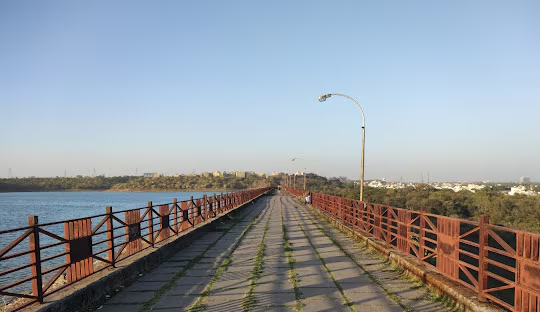
Quick Overview
| Detail | Information |
| River | Kaliyasot River, a tributary of the Betwa |
| Location | Near Chuna Bhatti village, Bhopal, Madhya Pradesh |
| Nearby Landmark | Excellence College |
| Dam Type | Earthen homogeneous dam |
| Dam Height | 34.25 metres |
| Dam Length | 1,080 metres |
| Top Width | 6.30 metres |
| Full Reservoir Level | 505.67 metres |
| Irrigation Coverage | Around 10,425 hectares across Bhopal and Raisen districts |
| Primary Purpose | Irrigation, flood control, drinking water supply |
| Entry Fee | None |
| Best Time to Visit | Monsoon and post-monsoon; sunrise or sunset |
Where Kaliyasot Dam Is Located
Kaliyasot Dam sits near Chuna Bhatti village in Bhopal, conveniently close to Excellence College, making it a genuinely easy destination for city residents. Most visitors reach the junction near the college and then climb a set of steps to the crest of the dam, with taxis and auto-rickshaws readily available for transport within the city.
While direct public transport specifically to the dam itself is somewhat limited, local buses or auto-rickshaws can get you to the vicinity, followed by a short walk or climb to reach the water. This proximity to the city centre is exactly why Kaliyasot has become such a reliable, low-effort escape for Bhopal residents rather than requiring a dedicated day trip.
The River Behind a Genuinely Interesting Naming Story
The dam is built across the Kaliyasot River, a tributary of the Betwa, and the river’s name carries a genuinely fascinating historical connection. Kaliyasot, or “Kaliya’s River,” is named after a Gond Commander who came to the aid of Raja Bhoj during a time of crisis, linking this modern reservoir to the same 11th-century ruler credited with building the massive dams and retaining walls that once created one of the largest man-made water bodies in the Indian Peninsula.
The Kaliyasot River itself originates as overflow from the dam and flows south-east for roughly 29 kilometres before joining the Betwa near Bhojpur. Interestingly, the flow in this stretch is genuinely minimal for much of the year, sustained largely by wastewater drainage from parts of Bhopal and Mandideep rather than natural river flow alone.
A History Rooted in Bhopal’s Ancient Water Legacy
Understanding Kaliyasot properly means briefly understanding the broader story of Bhopal’s lakes, since this modern dam sits within a landscape shaped by centuries of water engineering. Raja Bhoj, the scholar-emperor after whom Bhopal is named, initiated a massive project centuries ago, damming a naturally occurring triangular valley fed by headwaters of the Betwa and its tributaries. Archaeological evidence suggests this ancient lake once covered over 65,000 hectares, reaching depths of up to 30 metres in places, making it one of the largest man-made water bodies in the Indian Peninsula at the time.
The modern Kaliyasot Dam, constructed as an earthen homogeneous structure with a height of 34.25 metres and length of 1,080 metres, functions as a considerably more modest but genuinely practical successor to this ancient engineering ambition, addressing Bhopal’s contemporary irrigation and flood-control needs rather than recreating Raja Bhoj’s original scale.
What Kaliyasot Dam Does for Bhopal Today
The dam’s primary function is irrigation, supporting agriculture across roughly 10,425 hectares spanning both Bhopal and Raisen districts. Beyond this, it plays a genuinely important role in flood control during monsoon season, helping regulate water flow when the region receives heavy rainfall, and it contributes to drinking water supply for nearby villages.
It’s worth being honest about a genuine environmental concern here. The Kaliyasot River downstream of the dam receives sewage through multiple major drains carrying wastewater from Bhopal, Misrod, and Mandideep regions, with studies confirming that much of the river’s actual flow beyond the dam comes from this drainage rather than natural water sources. This is a documented water-quality issue rather than a resolved matter, and it’s worth keeping in mind particularly regarding any direct water contact downstream of the dam itself.
Why Bhopalis Genuinely Love This Spot
Kaliyasot has developed a reputation as one of the city’s best sunrise and sunset viewing points, alongside nearby favourites like Kerwa Dam and Manuabhan Tekri. Standing at the mid-highest point of the dam rewards visitors with a genuinely sweeping view of the Bhopal city skyline, a perspective that’s become popular among photographers and casual visitors alike.
Monsoon season transforms the entire area into something genuinely special, with lush green surroundings and a cool, refreshing breeze that draws crowds specifically chasing that “barsaat ka mausam” experience locals talk about so fondly. During particularly heavy rain years, the dam’s gates open, sending water flowing gently downstream, a sight several visitors have specifically described as energising to witness during an early morning walk.
What There Is to Do at Kaliyasot Dam
Walking along the dam’s crest remains the central activity here, ideal for morning runs, evening strolls, or quiet meditation away from the city’s usual noise. The area is popular for photography, particularly during golden hour, and evening visits often come with the added charm of local vendors selling roasted corn (bhutta) and other quick snacks near the crowded evening hours.
Some visitors do venture down toward the water itself, though this genuinely requires caution — beyond the general depth concerns of any large reservoir, occasional crocodile sightings have been reported here, making swimming a firmly discouraged activity rather than a casual option.
A Few Honest Drawbacks Worth Knowing
Visitor feedback on Kaliyasot is genuinely mixed regarding infrastructure. Several reviews specifically mention that major portions of the walking pathway remain unpaved, approach roads to the dam are in poor condition, and there’s no dedicated seating area for visitors wanting to simply relax by the water. Some visitors have also noted a lack of tree cover around parts of the dam, making a visit during peak midday heat considerably less comfortable than an early morning or evening trip.
Local commentary has repeatedly called for the Madhya Pradesh government and Bhopal Municipal Corporation to invest more seriously in developing this genuinely scenic spot into a properly maintained tourist attraction, given its clear popularity and natural appeal.
Timings and Entry Details
Kaliyasot Dam is generally accessible throughout the day with no official entry fee, and no advance booking is required for a visit. That said, sunrise and sunset remain the most recommended times, both for the quality of light and for a noticeably less crowded experience compared to midday visits, which can get genuinely hot given the limited shade around much of the dam area.
Best Time to Plan Your Visit
Monsoon season stands out as the definitive best time to visit, when the dam typically fills to capacity, its gates sometimes open, and the surrounding landscape turns a vibrant, saturated green that’s become genuinely synonymous with Bhopal’s rainy season culture. Outside monsoon, early mornings or evenings throughout the cooler months offer the most pleasant conditions for a peaceful walk or photography session.
Frequently Asked Questions
Q1. Is it safe to swim or enter the water at Kaliyasot Dam?
No, swimming is strongly discouraged given the reservoir’s considerable depth and occasional reported crocodile sightings. It’s best to enjoy the dam from its crest and pathways rather than entering the water directly.
Q2. Why does the Kaliyasot River sometimes look more like a drainage channel than a natural river downstream of the dam?
This reflects a genuine, documented water quality concern — much of the river’s flow beyond the dam comes from sewage drainage originating in parts of Bhopal, Misrod, and Mandideep, rather than purely natural water sources.
Q3. What’s the best time of day to visit Kaliyasot Dam for photography?
Sunrise and sunset are both widely recommended, offering the best light for capturing the dam, the Bhopal skyline view from its mid-highest point, and considerably fewer crowds compared to busier midday hours.
Q4. Is there an entry fee or advance booking required for Kaliyasot Dam?
No, there’s no official entry fee and no need for advance booking. Visitors can arrive anytime during daylight hours, though early mornings and evenings offer the most pleasant and least crowded experience.