 By Sanjeev Sinha
 Long before Sardar Sarovar became the face of Gujarat’s water story, Dharoi Dam was quietly doing the heavy lifting — supplying Ahmedabad with drinking water and holding back the Sabarmati’s unpredictable flow. What makes this dam genuinely worth knowing about today isn’t just its history, though. Gujarat Tourism has been actively transforming Dharoi into a full-fledged adventure destination, with a ₹1,100 crore development plan and an annual adventure festival now putting this once purely functional reservoir on the tourist map. If you’re in North Gujarat, here’s everything worth knowing.
Quick Overview
| Detail | Information |
| River | Sabarmati River |
| Location | Near Dharoi village, Satlasana Taluka, Mehsana district, Gujarat |
| Distance from Mehsana | Around 26–82 km (sources vary considerably) |
| Distance from Gandhinagar | About 83–104 km |
| Distance from Ahmedabad | Roughly 99–165 km |
| Nearest Railway Station | Mehsana Junction (also Varetha Station, Kheralu, about 22 km) |
| Nearest Airport | Sardar Vallabhbhai Patel International Airport, Ahmedabad |
| Foundation Laid | 1971, by Prime Minister Indira Gandhi |
| Completed | 1978 |
| Dam Type | Gravity dam |
| Dam Height | Around 45 metres |
| Catchment Area | 5,475 sq. km |
| Villages Affected | 19 partially, 28 fully submerged |
| Irrigation Coverage | Over 2 lakh hectares across Mehsana, Sabarkantha, Gandhinagar |
| Entry Fee | Free |
| Upcoming Development | ₹1,100 crore tourism project; Dharoi Adventure Festival, January-February 2026 |
Where Dharoi Dam Is Located
Dharoi Dam sits near Dharoi village in Satlasana Taluka, Mehsana district, in northern Gujarat. Distances reported across sources vary quite a bit, ranging anywhere from 26 to 82 kilometres from Mehsana town depending on the exact route, so it’s worth checking current directions before setting out rather than relying on a single figure.
The dam connects well by road to major Gujarat cities, with Mehsana, Gandhinagar, and Ahmedabad all reachable via a decent highway network. Mehsana Junction serves as the primary railway link, while Ahmedabad’s international airport, roughly 95 to 165 kilometres away depending on the source, remains the nearest air connection for visitors travelling from further afield.
The River Behind This Historic Dam
The dam is built across the Sabarmati River, the same waterway that flows through Ahmedabad and holds deep cultural and civic significance for the entire state. Before Sardar Sarovar Dam existed on the Narmada, Dharoi was actually one of the key sources supplying drinking water to Ahmedabad, a role that’s easy to overlook today given how much attention Gujarat’s newer, larger dams tend to receive.
The Sabarmati’s catchment feeding into Dharoi spans a substantial 5,475 square kilometres, and even today, the dam continues supplying water to Sabarkantha and Mehsana districts, along with some contribution to Patan district, keeping it genuinely relevant to the region’s water security decades after its construction.
A History Driven by Grassroots Campaigning
What’s genuinely remarkable about Dharoi Dam’s backstory is how it came to be approved in the first place. Politician Vasant Parikh was the chief driving force behind the project, and he reportedly undertook a nine-day walk from Vadnagar to Gandhinagar specifically to campaign for the dam’s approval. He went further still, meeting then Prime Minister Indira Gandhi in both Mumbai and New Delhi to press the case for this project.
That advocacy paid off. Indira Gandhi personally laid the foundation stone in 1971, and construction was completed by 1978, giving the dam a genuinely grassroots-driven origin story that’s somewhat unusual compared to many of India’s large infrastructure projects, which typically originate from top-down government planning rather than sustained local campaigning.
The Human Cost Behind This Water Security
It’s worth being honest about what this project required. Building Dharoi Dam and filling its reservoir led to 19 villages being partially submerged and another 28 being fully submerged, a genuinely significant displacement that accompanied the dam’s benefits to the wider region. This is a part of the dam’s history worth acknowledging rather than glossing over, even as the project delivered real, lasting agricultural and water-supply benefits to over 2 lakh hectares across Mehsana, Sabarkantha, and Gandhinagar districts.
From Utility Reservoir to Adventure Tourism Hub
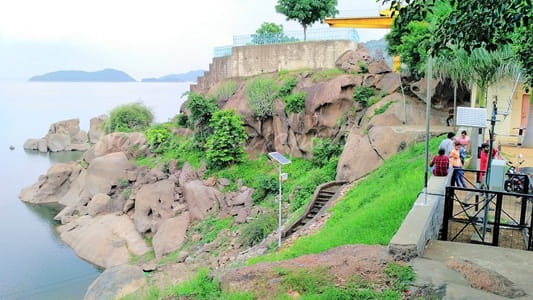
This is genuinely the most exciting recent development in Dharoi’s story. The Gujarat government has announced a three-phase, ₹1,100 crore tourism development project for the Dharoi Dam area, aiming to build an adventure water sports arena, an amphitheatre, and themed parks around the reservoir’s naturally scenic setting of rugged granite hills and small islands.
As part of this push, Gujarat Tourism, in collaboration with the Adventure Tour Operators Association of India, is organising the Dharoi Adventure Festival 2026, tentatively running for about 30 days from 23 January to 23 February 2026. The festival is specifically designed to position Dharoi as a leading adventure tourism destination, and given the scale of investment involved, this quiet dam site looks set to transform considerably over the coming years.
What There Is to See and Do Right Now
Even before the larger tourism development fully materialises, Dharoi already offers a genuinely peaceful visitor experience. The reservoir’s vast, calm waters, often described by visitors as having a misty, almost mysterious atmosphere, particularly during early mornings, make it a rewarding spot for photography and quiet reflection.
Boating and birdwatching are commonly mentioned activities here, and the surrounding granite hills and islands add visual interest beyond a typical flat reservoir view. Visitor experiences suggest this remains very much a picnic-and-scenery destination rather than a heavily developed tourist complex, at least for now, with several reviews specifically noting there’s no entrance fee and no permission required to visit, though a checkpoint near the entrance does verify visitor details, so carrying identification like a driving licence is advisable.
Practical Realities Worth Knowing
Food availability directly at the dam site remains limited, based on multiple visitor accounts, so carrying your own snacks and water is a sensible precaution rather than assuming you’ll find dining options nearby. Given the site’s semi-developed nature, it’s also worth exercising caution near restricted zones, particularly during periods of high water level, and avoiding littering to help preserve what remains a genuinely scenic natural setting.
Nearby, Taranga Hill offers an easy add-on for visitors wanting to extend their trip with some additional sightseeing in the region.
Timings and Entry Details
Entry to Dharoi Dam is free, and no special permission is required to visit under normal circumstances. Given the site’s evolving tourism infrastructure, particularly with the adventure festival and broader development plans underway, it’s worth checking current visiting hours and any temporary access changes locally before planning your trip, especially if you’re timing your visit around the Dharoi Adventure Festival itself.
Best Time to Plan Your Visit
Monsoon season is widely recommended by visitors, with several specifically suggesting rainy-day visits for the most scenic experience, when the reservoir fills and the surrounding hills turn genuinely lush. If you’re interested in the upcoming adventure tourism developments, timing your visit around the Dharoi Adventure Festival window in January-February 2026 offers a chance to experience organised activities alongside the site’s natural scenery.
Frequently Asked Questions
Q1. Is there an entry fee to visit Dharoi Dam?
No, entry is free and no special permission is currently required, though a checkpoint near the entrance may ask for identification like a driving licence, so it’s worth carrying valid ID when you visit.
Q2. What’s driving the recent interest in Dharoi Dam as a tourist destination?
The Gujarat government has announced a ₹1,100 crore, three-phase tourism development plan for the area, alongside the Dharoi Adventure Festival, aiming to transform the dam’s scenic surroundings into a full adventure tourism hub with water sports, an amphitheatre, and themed parks.
Q3. Are food and dining facilities available at Dharoi Dam?
Currently, options remain limited according to multiple visitor accounts, so it’s advisable to carry your own snacks and water rather than expecting extensive dining facilities on-site, at least until the broader tourism development is completed.
Q4. Is Dharoi Dam worth visiting compared to Sardar Sarovar Dam?
They offer genuinely different experiences. Dharoi is a quieter, more scenic getaway with developing adventure tourism potential, while Sardar Sarovar offers larger-scale infrastructure, the Statue of Unity, and considerably more developed visitor facilities. Your choice really depends on whether you’re seeking a peaceful nature escape or a more comprehensive tourist experience.